

The end of December has a special feeling: the rush of the holidays fades, the calendar is quieter, and a new year is close enough to touch. It is the perfect moment for a fresh start, but “get my life together” is too big to act on. A new year reset checklist turns that vague wish into small, finished tasks you can tick off one by one.
This guide gives you a complete new year reset checklist in seven areas: home, money, digital life, health and routines, paperwork, relationships and goals. You will also get a simple seven-day plan for the week between Christmas and New Year’s Day, a one-hour express version for busy people, and a printable-style checklist table you can copy. You do not need to do everything. Choose what helps most, finish it, and walk into January feeling lighter.
Quick answer
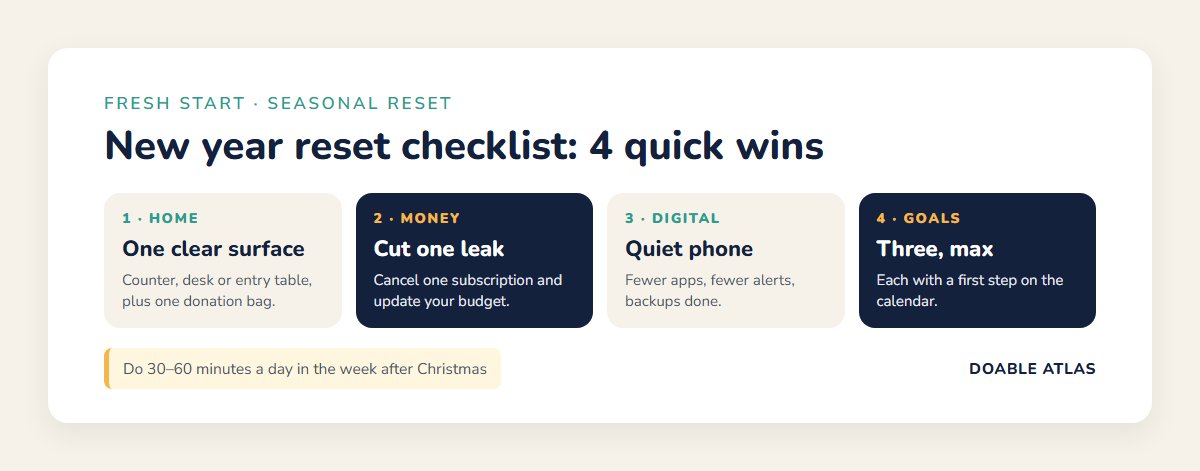
A good new year reset checklist covers seven areas: clear one space at home, review your spending and subscriptions, clean up your phone and inbox, reset sleep and daily routines, update paperwork and passwords, reconnect with people who matter, and write no more than three goals with a first step for each. Spread the work across the week between Christmas and New Year, about 30 to 60 minutes a day.
In this guide
Why a new year reset checklist works better than resolutions
Resolutions usually describe a result: “get fit”, “save more”, “be organized”. A reset checklist describes actions: “cancel one unused subscription”, “clear the kitchen counter”, “set a bedtime alarm”. Actions are easier to start, easier to finish and easier to repeat. Each small win also builds momentum, which is exactly what you need when energy is low after the holidays.
A checklist also protects you from the all-or-nothing trap. If you miss one task, the rest still count. And because a reset clears clutter, money leaks and digital noise first, any goals you set afterward have more room to grow. Our guide on how to build better habits explains why small, specific actions beat big promises.
When to do your new year reset
The week between Christmas and New Year’s Day is ideal for many people: work is often slower, kids may be home, and the mood naturally turns toward reflection. If that week is busy for you, any calm week in January works just as well. The calendar date matters far less than giving yourself protected time.
The new year reset checklist: 7 areas
1. Home reset: your new year reset checklist starts here
Your space shapes your mood. You do not need a whole-house makeover; focus on the spots you see every day.
- Take down holiday decor slowly. Pack one box per day and label it clearly so next year starts easier.
- Clear one surface completely, such as the kitchen counter, entry table or desk, and keep it clear for a week.
- Do a fridge and pantry check. Toss expired items, use up leftovers and write a short shopping list. Our tips on how to keep food fresh longer help the new groceries last.
- Fill one donation bag with clothes, toys or gadgets you did not use this year.
- Test your smoke alarms. The US Fire Administration recommends testing smoke alarms monthly and replacing them every 10 years (USFA). New Year’s week is an easy date to remember.
- Restock basics: batteries, light bulbs, first-aid supplies and your emergency kit. Use our emergency kit checklist for home as a guide.
If you want to go further, our step-by-step plan on how to declutter your home fast breaks bigger rooms into short sessions.
2. Money reset
January is when holiday spending shows up on statements. A short money reset keeps surprises small and sets up the year.
- Add up holiday spending and write the total down without judgment. Knowing the number is the first step.
- Review every subscription. Open your bank and card statements and list recurring charges. Cancel at least one you no longer use. Our guide to subscriptions vs one-time purchases helps you decide what to keep.
- Set up or refresh your budget. A simple sheet with income, fixed bills, flexible spending and savings is enough. See how to create a simple budget spreadsheet.
- Check your credit reports. You can get free credit reports from Equifax, Experian and TransUnion every week at AnnualCreditReport.com, and the FTC confirms this access is now permanent (FTC). Look for accounts you do not recognize.
- Choose one savings move, such as an automatic transfer on payday, even if it is small.
- Plan for big known costs like insurance renewals, car registration or annual fees, and divide them by 12.
Groceries are often the easiest place to save quickly; our guide on how to save money on groceries has practical ideas. This new year reset checklist is general information, not financial advice.
3. Digital reset: the tech side of your new year reset checklist
Phones and inboxes collect clutter just like closets. A digital reset makes your devices calmer and safer.
- Delete apps you have not opened in months and move the rest so your home screen shows only daily essentials.
- Turn off non-essential notifications. Keep messages from people and important alerts; silence shopping, games and most news apps.
- Clear your inbox: unsubscribe from five newsletters you never read and archive everything older than 30 days. Our guide on how to manage email overload shows a simple system.
- Back up photos and files from the year. Follow how to back up your phone.
- Update passwords for your email and bank, and turn on multi-factor authentication where available. A password manager for beginners makes this much easier.
- Organize one folder: your desktop or downloads folder is a good start. See how to organize digital files.
For a deeper clean, work through our full digital declutter checklist.
4. Health and routine reset
Holidays often mean late nights, rich food and less movement. A gentle routine reset helps you feel like yourself again. This is general wellness information, not medical advice.
- Return to a steady wake-up time. Consistency matters more than an early hour. The CDC notes that most adults need seven or more hours of sleep a night (CDC).
- Add a short daily walk. Ten to twenty minutes outside is a simple, low-pressure restart.
- Plan simple meals for the first week of January so you are not deciding every evening.
- Book routine appointments you have been putting off, such as a dental cleaning, eye exam or annual checkup.
- Create a short evening routine: tidy for five minutes, set out tomorrow’s essentials and put screens away before bed. Our evening reset routine walks you through it.
5. Paperwork section of the new year reset checklist
Paperwork is easy to ignore until it becomes urgent. A little admin in late December saves stress in April.
- Create a “taxes” folder (paper or digital) for W-2s, 1099s, receipts and charitable donation records as they arrive in January.
- Clear out old records carefully. The IRS says you generally need to keep tax records for three years, with longer periods in some situations (IRS). Shred, do not simply toss, anything with personal details.
- Check expiration dates on your driver’s license, passport, car registration and insurance policies.
- Scan important documents so you have a backup. Our guide on how to scan documents with your phone shows the quickest way.
- Update emergency contacts at work, school and on your phone.
6. Relationship reset
A new year is a natural reason to reach out. Connection is one of the most rewarding parts of any reset.
- Send thank-you messages for gifts, help or kindness from the past year.
- Reconnect with one person you have lost touch with. A short “I was thinking of you” text is enough.
- Put one shared plan on the calendar, such as a dinner, walk or video call in January.
- Reflect on boundaries. If certain commitments drained you this year, decide what you will do differently. Our guide on how to set boundaries politely offers kind scripts.
7. Goals: the last step of the new year reset checklist
Only now, with a calmer home, clearer finances and fewer distractions, is it time to think about goals.
- Look back first. Write three things that went well this year and one thing you learned.
- Choose no more than three goals for the new year. Fewer goals get more attention.
- Make each goal specific. “Walk 20 minutes, four days a week” beats “get healthier”. Our guide on how to set achievable goals explains the method.
- Write the very first step for each goal and put it on your calendar for the first week of January.
- Plan a monthly check-in to review progress and adjust without guilt.
A 7-day new year reset checklist plan
If you like structure, spread your new year reset checklist across one week. Each day takes about 30 to 60 minutes.
| Day | Focus | Main tasks |
|---|---|---|
| Day 1 | Reflect | Three wins, one lesson, what to keep and what to drop |
| Day 2 | Home | Clear one surface, fridge check, one donation bag |
| Day 3 | Money | Holiday total, subscriptions, budget sheet |
| Day 4 | Digital | Apps, notifications, inbox, backups, passwords |
| Day 5 | Paperwork | Tax folder, expiration dates, scans |
| Day 6 | People and health | Thank-you notes, one reconnection, appointments, sleep schedule |
| Day 7 | Goals | Up to three goals, first steps on the calendar, monthly check-in |
Treat this new year reset checklist plan as a menu, not a contract. If a day gets busy, move its tasks to the next one. Our article on how to plan your week shows how to fit tasks around real life.
The 1-hour express new year reset checklist
Short on time? Do these six tasks in about an hour and you will still feel the difference:
- Clear the one surface that bothers you most (10 minutes).
- Cancel one unused subscription (5 minutes).
- Delete ten apps and turn off non-essential notifications (10 minutes).
- Unsubscribe from five email lists (5 minutes).
- Set a consistent wake-up time and alarm for January (5 minutes).
- Write up to three goals and the first step for each (25 minutes).
Printable new year reset checklist
Copy this new year reset checklist into a note, print it or use it as a template. Tick each line as you finish it.
| Area | Task | Done? |
|---|---|---|
| Home | One surface cleared, fridge checked, donation bag filled | ☐ |
| Home | Smoke alarms tested, basics restocked | ☐ |
| Money | Holiday total written, one subscription cancelled | ☐ |
| Money | Budget updated, credit reports checked | ☐ |
| Digital | Apps and notifications trimmed, inbox cleared | ☐ |
| Digital | Backup done, key passwords and MFA updated | ☐ |
| Health | Wake-up time set, daily walk planned, appointments booked | ☐ |
| Paperwork | Tax folder created, expiration dates checked | ☐ |
| People | Thank-yous sent, one person contacted, one plan booked | ☐ |
| Goals | Up to three goals, first steps scheduled | ☐ |
New year reset checklist for different situations
A new year reset checklist for families
Give each family member one job: kids can sort toys for donation, teens can clean up their phones, and adults can handle money and paperwork. Hold a short family meeting to choose one shared goal, such as a weekly game night or a Sunday walk.
For people living alone
A reset can feel like a gift to yourself. Make it pleasant with music, a favorite drink and short sessions. Invite a friend to do their own reset at the same time and check in by text.
A new year reset checklist for busy professionals
Use the express version above, then add one area per weekend in January. Time blocking helps; our time blocking for beginners guide shows how to protect short reset sessions on a full calendar.
For students
Focus on digital and routine resets: clean up files from last semester, back up notes, set a steady sleep schedule and plan study blocks before classes start again.
What to do with everything you clear out
Working through a new year reset checklist often leaves you with bags and boxes by the door. Deal with them quickly so the clutter does not simply move to the garage.
- Donate: clean clothes, toys, books and working household items can go to local charities, shelters or community groups. Keep the receipt in your new tax folder if you itemize deductions.
- Sell: only bother with items worth your time, such as furniture, electronics or kids’ gear in good condition. Set a deadline; anything unsold after two weeks gets donated.
- Recycle: check your city’s rules for paper, cardboard and holiday packaging. Old phones, batteries and cables often need special drop-off points, so look up an electronics recycling location near you.
- Shred: bank statements, old bills and anything with account numbers or your Social Security number. Many communities host free shred days early in the year.
- Toss: broken items, expired products and anything nobody would want.
Put the donation bags in your car the same day. Things that leave the house right away never sneak back into closets.
How to make your new year reset checklist last all year
The biggest benefit of a reset comes from keeping it going. Instead of one huge effort each December, try small, regular check-ins:
- Weekly (15 minutes): clear the main surfaces, empty the fridge of leftovers, process your inbox and look at next week’s calendar.
- Monthly (30 minutes): review spending against your budget, check subscriptions, back up your phone and look at progress on your three goals.
- Seasonally (1 to 2 hours): rotate clothes, deep-clean one room, test smoke alarms if you have not, and update documents that changed.
Put these check-ins on your calendar now, while your motivation is high. A recurring reminder on the first Sunday of every month is enough to keep the habit alive. When you miss one, simply pick up at the next one; the system still works even if it is not perfect. Over time, these short sessions mean you will never need a stressful, all-weekend cleanup again, and next December’s reset will take half the time.
If you want an accountability partner, share your new year reset checklist with a friend or family member and compare progress once a month. Saying your goals out loud to someone you trust makes them more concrete, and celebrating small wins together keeps the reset fun instead of a chore.
Common new year reset checklist mistakes
- Trying to do everything in one day. You will burn out by lunch. Spread the work out.
- Buying organizers before decluttering. Remove things first; you will need fewer containers.
- Setting ten goals. Choose three at most and make them specific.
- Skipping the review. Looking back at the past year tells you what to keep and what to change.
- Waiting for motivation. Start with the smallest task on the list; motivation usually follows action. Our guide on how to stop procrastinating has more ideas.
Quick quiz: new year reset checklist
1. How often can you get free credit reports at AnnualCreditReport.com?
Every week from each of the three bureaus, according to the FTC.
2. How many goals should you set during your reset?
No more than three, each with a specific first step.
3. True or false: you should buy storage bins before decluttering.
False. Declutter first, then buy only the containers you actually need.
New year reset checklist FAQ
What should be on a new year reset checklist?
Cover seven areas: home, money, digital life, health and routines, paperwork, relationships and goals. Keep each task small and specific, such as “cancel one subscription” or “clear the kitchen counter”.
How long does a new year reset take?
A full reset takes about a week at 30 to 60 minutes a day. The express version takes about one hour and still covers the most helpful tasks.
Is it too late to do a reset in January or February?
Not at all. A reset works any time you want a fresh start. Many people do a smaller version every season or every month with a weekly reset checklist.
How do I keep my new year reset going?
Schedule a monthly check-in, keep your goals visible and repeat a mini reset each week. Small, steady habits matter more than one big push.
The bottom line
A new year reset checklist turns the end of the year into calm, doable action: one cleared surface, one cancelled subscription, one quieter phone, one updated folder, one message to a friend and a few clear goals. Pick the area that bothers you most, finish one task today, and let each small win carry you into a lighter, more organized new year.