

The holidays are supposed to feel warm and joyful. Yet for many people, December looks like a packed calendar, a stretched budget, long drives, family tension and the quiet ache of missing someone. If you have ever felt more tired than festive by the 24th, you are far from alone.
This guide explains how to reduce holiday stress with practical, realistic steps: where the pressure really comes from, how to plan, spend, eat and sleep in ways that protect your energy, scripts for tricky family moments, and a simple daily routine for the busiest weeks of the year. You do not need to use every idea. Pick the two or three that fit your situation, and come back to the rest when you need them.
Quick answer
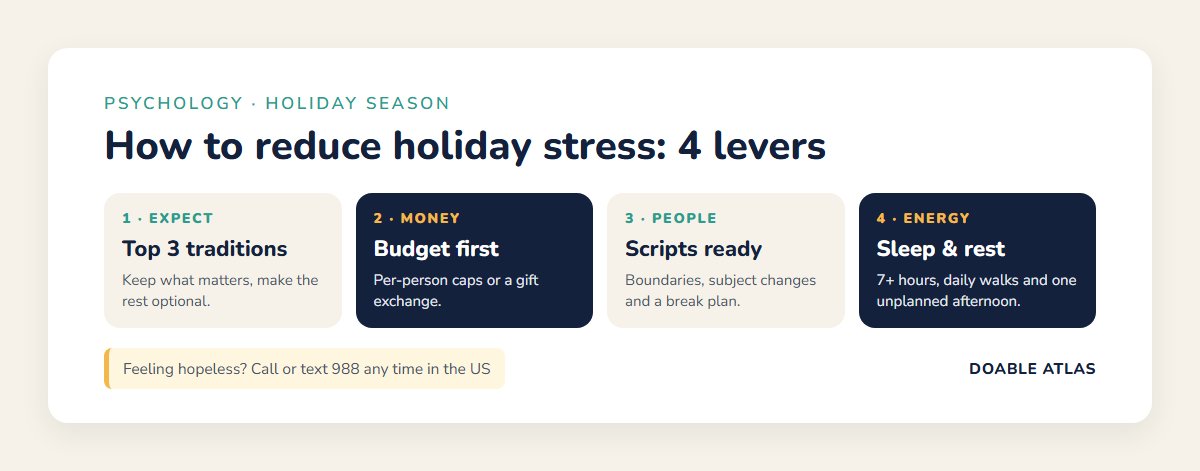
To reduce holiday stress, lower expectations to your top three traditions, set a spending limit before you shop, plan tasks week by week, protect sleep and movement, decide in advance how you will handle tense conversations, and leave room for grief or loneliness. Say no to some invitations, ask for help with specific jobs, and schedule rest as if it were an appointment. If stress turns into hopelessness, reach out for support.
In this guide
Why the holidays feel so stressful
Holiday stress is common and growing. In the American Psychiatric Association’s 2025 Healthy Minds poll, 41% of US adults said they expected more stress this holiday season than last year. The top worries were missing someone or grief (48%), affording or finding gifts (46%), challenging family dynamics (32%) and loneliness (31%) (American Psychiatric Association).
Those numbers point to the real sources of pressure. It is rarely one big thing. It is a pile-up of money, time, travel, people and emotions, all compressed into a few weeks, often while work and school are also busy. The good news is that each of those pressures has a practical lever you can pull.
The five main stress sources
- Expectations: trying to recreate a perfect holiday from childhood, social media or a movie.
- Money: gifts, travel, food and events that cost more than planned.
- Time: too many events and tasks for too few evenings.
- People: family conflict, difficult relatives or hosting pressure.
- Emotions: grief, loneliness, comparison and exhaustion.
How to reduce holiday stress: 12 steps that work
1. Choose your top three traditions
Ask everyone in your household: “Which three things would make it feel like the holidays to you?” Keep those, and make everything else optional. Fewer, more meaningful traditions are easier to enjoy than a long list you rush through.
2. Put the season on paper
A written plan removes the constant “what am I forgetting?” feeling. Spread tasks across several weeks rather than cramming them into the last few days. Our Christmas planning checklist printable breaks the season into six calm weeks with a free one-page printable.
3. Set a spending limit before you shop
Money worries are among the biggest holiday stressors. Decide on a total budget, divide it by person, and track what you spend. If you want a simple system, see how to create a simple budget spreadsheet and add a holiday tab. Suggesting a gift exchange or price cap to family often brings relief to everyone, not just you.
4. Say no to something
Every yes costs time and energy. Choose which events truly matter and decline the rest kindly: “Thank you so much for inviting us. We are keeping things simple this year, but we would love to see you in January.” Our guide on how to set boundaries politely has more scripts.
5. Ask for specific help
“Can you help?” is easy to ignore. “Can you bring a salad and handle drinks?” is easy to say yes to. Give each person in your home one clear job, such as cards, wrapping, groceries or dishes.
6. Protect sleep
Late parties, travel and cooking can shrink sleep fast, and tired brains feel stress more intensely. The CDC notes that adults generally need seven or more hours of sleep per night (CDC). Keep a consistent wake-up time when you can, and use a short wind-down routine; our evening reset routine is a simple place to start.
7. Keep moving
Even a 10-minute walk after a big meal can lift your mood and clear your head. Make it social: invite relatives for a walk around the block, or start a post-dinner tradition of a family stroll to look at lights.
8. Watch the extras: alcohol, sugar and screens
Holiday drinks and treats are part of the fun, but too much can disturb sleep and shorten tempers. US dietary guidelines define moderate drinking as up to one drink a day for women and up to two for men. Alternate with water, offer alcohol-free options when you host, and put the phone away during meals.
9. Plan for difficult conversations
If certain topics reliably cause arguments, decide your approach ahead of time. You can set a family “no politics at dinner” agreement, prepare a neutral subject change (“Speaking of trips, who has plans for next year?”) or step outside for fresh air. Our guide on how to have difficult conversations shows how to stay calm when you do need to talk.
10. Make room for grief
The first holidays after a loss, a divorce or a move can feel especially heavy. You do not have to pretend. Light a candle, cook a loved one’s favorite dish, share stories or change traditions completely this year. It is okay to feel sad and grateful on the same day.
11. Reach out if you feel alone
Loneliness is one of the most common holiday stressors. Volunteer, join a community meal, call an old friend or invite a neighbor who might be alone. Small connections count.
12. Schedule real rest
Put at least one unplanned afternoon or evening on the calendar and guard it. Read, nap, watch a movie or take a long bath. Rest is not a reward for finishing everything; it is what makes the rest of the season enjoyable.
How to reduce holiday stress: triggers and quick fixes
| Trigger | Quick fix |
|---|---|
| Gift list keeps growing | Set a per-person cap or suggest a gift exchange |
| Too many invitations | Pick two or three, decline the rest warmly |
| Hosting overwhelm | Make it a potluck; cook two dishes ahead |
| Travel delays | Pack snacks, chargers and patience; leave buffer time |
| Tense relatives | Prepare a subject change and a break plan |
| Comparison on social media | Mute apps for a few days; focus on your own top three |
| Feeling low or lonely | Call someone today; plan one shared activity |
A calm daily routine for the busiest weeks
- Morning (10 minutes): glass of water, short walk or stretch, look at today’s top three tasks.
- Midday: eat a real lunch, step outside for daylight.
- Afternoon: one focused block for holiday tasks such as wrapping, orders or cards.
- Evening: screens off 30 minutes before bed, tidy for five minutes, write tomorrow’s top three.
If you like structure, our morning routine for productivity guide can be adapted for the holidays with a lighter, kinder version.
Calm techniques to reduce holiday stress anywhere
- Slow breathing: breathe in for a count of four, hold briefly, and breathe out for a count of six. Repeat five times.
- Name it: silently label the feeling (“I’m overwhelmed”) before reacting. Naming emotions can make them easier to manage.
- Step away: a two-minute break in another room or outside is often enough to reset.
- Five senses check: notice five things you see, four you hear, three you can touch. It pulls attention back to the present.
- Write it down: if your mind keeps spinning, dump every worry onto paper. Our article on why people overthink explains why this helps.
Scripts for common holiday moments
When a relative criticizes your choices
“I know you care, and this is what works for us right now. How has your year been?”
When you cannot afford the usual gifts
“We are keeping gifts simple this year. Would you be up for a $25 gift exchange or a family game night instead?”
When you need to leave early
“This was lovely. We are heading out early to keep the kids on schedule. Thank you for having us.”
When politics comes up at dinner
“Let’s save that one for another day. Who has the best travel story from this year?”
How to reduce holiday stress for different situations
Parents
Kids pick up on adult stress quickly. Keep bedtimes as steady as possible, plan quiet days between big events, and choose a few simple traditions children can count on. Let go of perfect photos.
People working through the holidays
Healthcare workers, retail staff and many others work hard in December. Celebrate on a different day if you need to, plan easy meals for shift days and protect sleep above extra events.
People spending the holidays alone
Plan your day in advance so it does not feel empty: a favorite meal, a long walk, a movie marathon, a video call with a friend or volunteering in the morning. Many communities host open holiday meals.
Hosts
Simplify the menu, accept help, and set the table the night before. Remember that guests come for the company, not perfection.
How to reduce holiday stress about money
Because gifts and costs ranked among the top worries in the APA poll, it is worth a dedicated 15-minute money reset at the start of the season:
- Check what you actually have for the holidays after bills, rent and savings goals.
- Write the total budget on a sticky note or the first line of your list.
- Split it into gifts, food, travel and extras, and leave a 10% buffer for surprises.
- Choose a payment rule: for example, debit or cash only, or paying any credit card balance in full in January.
- Track as you go in a notes app or spreadsheet so there are no January shocks.
Thoughtful, low-cost gifts such as a handwritten letter, a framed photo, homemade cookies or a promise of time together are often remembered longer than expensive ones.
How to reduce holiday stress when traveling
Holiday travel combines crowds, weather and tight schedules. A few habits make a big difference:
- Travel off-peak if you can: early morning flights and mid-week days are often calmer.
- Build in buffer time for security lines, traffic and delays, and avoid tight connections.
- Pack a comfort kit: snacks, water bottle, chargers, medications, headphones and a small activity for kids.
- Share plans with family so nobody worries if you are running late.
- Plan a recovery day after long trips before returning to work or school.
How to reduce holiday stress at work
December deadlines rarely pause for the holidays. Year-end reports, coverage for colleagues on vacation and office parties all compete with family plans. A few work habits keep the season manageable:
- Look at the whole month early. Mark deadlines, days off and team events so nothing surprises you in the final week.
- Agree on coverage with your team before people start leaving, and write down who is handling what.
- Finish the hardest task first each morning while your energy is highest, and batch email into two or three set times. Our guide on how to focus without getting distracted has simple techniques.
- Set an out-of-office message with clear return dates and a contact for urgent issues, then actually log off.
- Keep office celebrations optional for yourself. Attending for an hour is often enough to connect without losing your evening.
If you manage a team, model the same behavior: avoid sending late-night messages during the holidays, and make it clear that time off really is time off. That small signal can lower stress for everyone.
Social media and holiday comparison
Perfect trees, matching pajamas and spotless tables on social media can make your own holidays feel lacking. Remember that you are seeing highlights, not real life. Mute or limit apps for a few days, especially in the evening, and spend that time with the people in front of you. Our guide on how to stop comparing yourself to others offers practical ways to break the comparison loop.
Holiday stress checklist
| Check | Done? |
|---|---|
| Top three traditions chosen | ☐ |
| Holiday budget written down | ☐ |
| Tasks spread across weeks | ☐ |
| One invitation politely declined | ☐ |
| Jobs assigned to household members | ☐ |
| Rest time blocked on the calendar | ☐ |
| Someone to check in on this season | ☐ |
When holiday stress is more than stress
Feeling tired or overwhelmed for a few days is normal. But if you notice lasting hopelessness, trouble functioning, changes in sleep or appetite for weeks, or thoughts of harming yourself, please reach out for help. In the US, you can call or text 988 to reach the 988 Suicide and Crisis Lifeline any time (988lifeline.org). Talking with a doctor or a licensed therapist is a sign of strength, not weakness. This article is general information, not medical advice.
Quick quiz: how to reduce holiday stress
1. What was the top holiday worry in the 2025 APA poll?
Missing someone or grief, named by 48% of adults.
2. What is the simplest way to cut gift stress?
Set a per-person budget before shopping, or suggest a gift exchange with a price cap.
3. True or false: rest should come after everything is done.
False. Schedule rest first; it gives you the energy to enjoy the rest of the season.
Holiday stress FAQ
Is it normal to feel sad during the holidays?
Yes. Grief, loneliness and mixed feelings are common, and the season can make them more noticeable. Talking about it, keeping a routine and connecting with others can help. If sadness lasts for weeks or affects daily life, talk with a health professional.
How do I reduce holiday stress when I am hosting?
Keep the menu small, cook ahead, accept every offer of help and give guests specific jobs. Set the table the night before and plan an easy breakfast for the next morning.
How can I reduce holiday stress for my kids?
Keep sleep and meal routines as steady as possible, limit back-to-back events and give children a few predictable traditions to look forward to. Calm adults are the biggest stress reducer for kids.
What if my family disagrees about holiday plans?
Talk early, offer options and consider alternating years between families. It is fine to celebrate on a different day or in a smaller way.
After the holidays: a gentle reset
When the season ends, give yourself a soft landing. Return to your normal sleep schedule, take down decorations over a few days rather than all at once, review your spending and write a short note about what you want to repeat or skip next year. Our weekly reset checklist helps get your home and schedule back on track.
The bottom line
Learning how to reduce holiday stress is less about doing more and more about choosing well: fewer traditions done with love, a budget you can keep, a plan on paper, steady sleep and movement, prepared words for tense moments and space for grief and rest. Pick one step from this guide today, perhaps choosing your top three traditions, and let that be enough for now.