
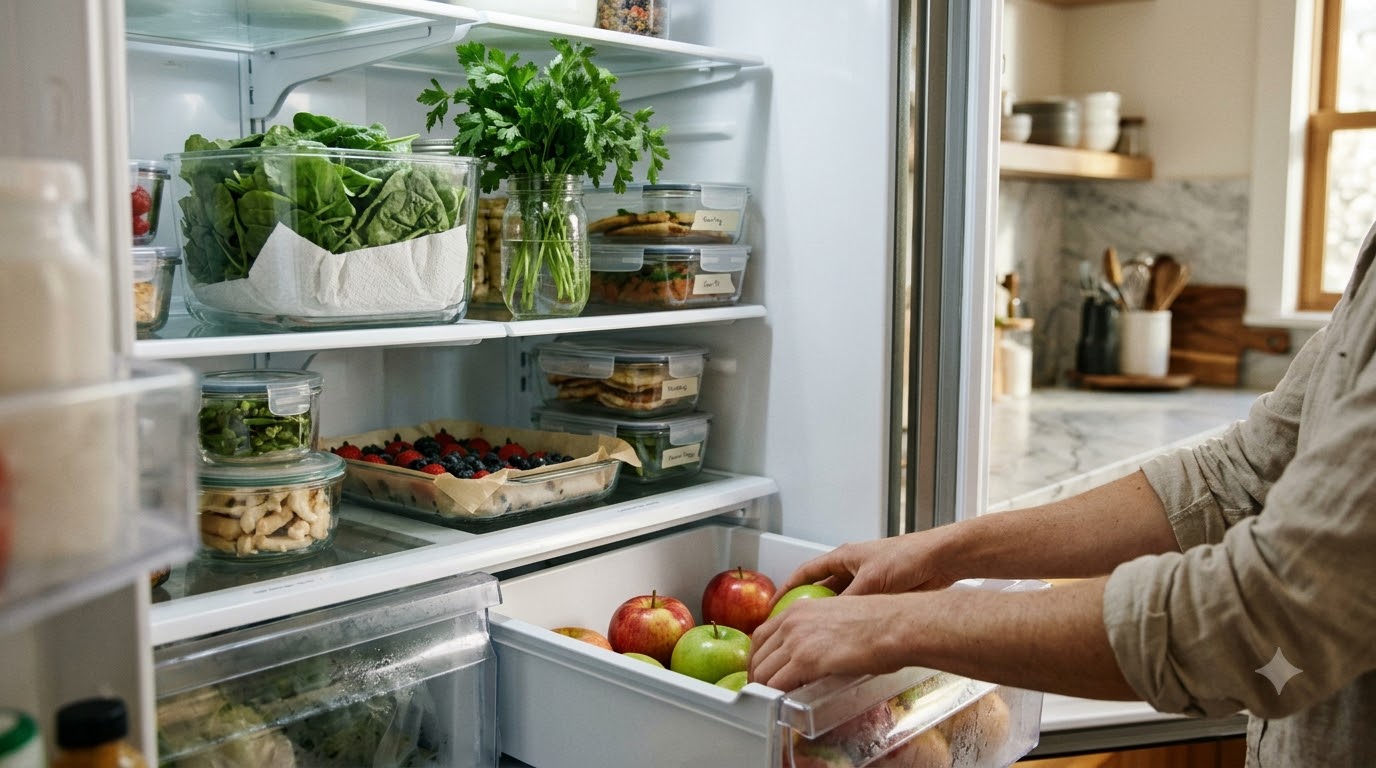
You buy a bag of spinach on Sunday with good intentions, and by Thursday it has turned into a dark, slimy mess at the back of the fridge. The strawberries grew fuzz overnight, the bread went stale, and half an onion is quietly drying out somewhere. Wasted food is frustrating, and it is expensive. The good news is that learning how to keep food fresh longer does not require special gadgets or a perfect kitchen. It mostly comes down to temperature, air, moisture, and knowing which foods should never be stored together.
This guide on how to keep food fresh longer explains why food spoils, then walks you through simple, practical storage rules for the fridge, freezer, and pantry, with specific advice for fruit, vegetables, herbs, bread, dairy, meat, and leftovers. You will also find a printable fridge storage map you can save and stick on your fridge door.
In this guide
Why food goes bad
Every food spoils for a few predictable reasons. Once you understand them, the storage rules stop feeling random.
- Microbes: bacteria, yeasts, and molds grow on food, especially when it is warm and moist. Some cause visible spoilage, such as mold or slime. Others, such as certain bacteria that cause food poisoning, do not change how food looks or smells at all.
- Moisture: too much moisture encourages mold and rot, while too little makes produce wilt and bread go hard.
- Air: oxygen causes fats to go rancid, cut fruit to brown, and frozen food to develop freezer burn.
- Ethylene gas: many fruits release this natural ripening gas, which speeds up ripening and spoilage in nearby produce.
- Temperature: warmth speeds up almost every kind of spoilage. Cold slows it down.
Knowing how to keep food fresh longer is really about controlling these five factors. The right temperature, the right amount of air and moisture, and smart separation between foods can add days or even weeks to many groceries.
Get your fridge temperature right first
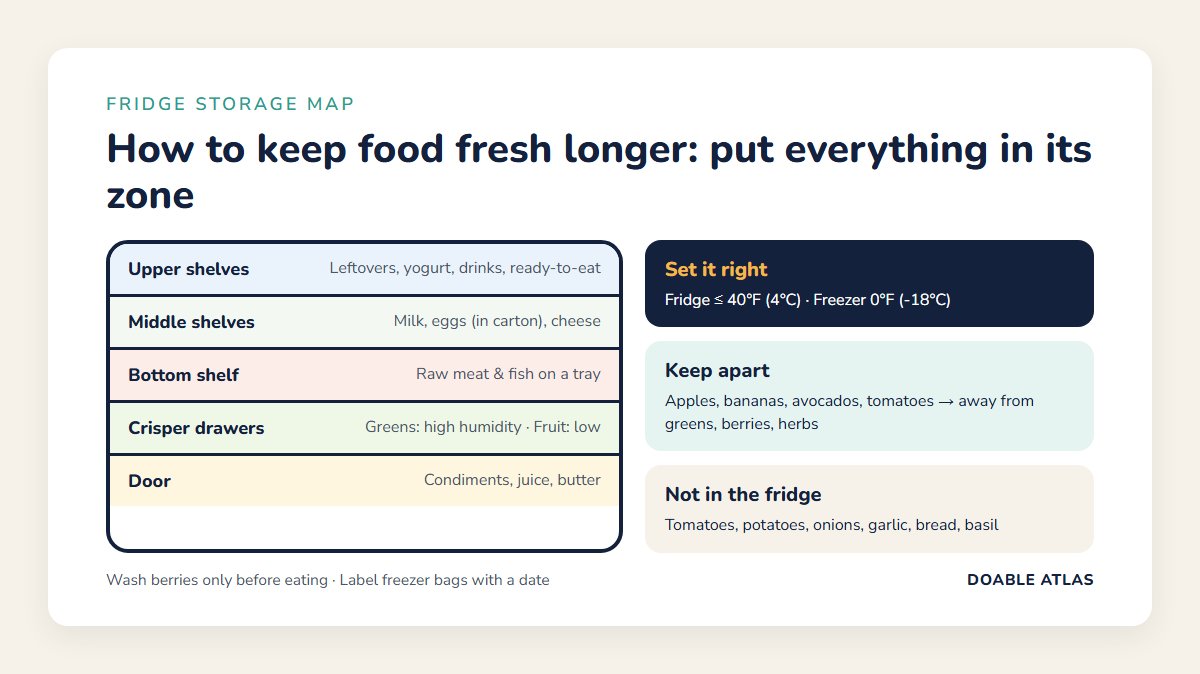
If you are wondering how to keep food fresh longer, the single most important step is making sure your refrigerator and freezer are cold enough. The U.S. Food and Drug Administration recommends keeping your refrigerator at or below 40°F (4°C) and your freezer at 0°F (-18°C) (FDA). Many fridges run warmer than people think, especially when they are overfilled or the door is opened often.
- Use an appliance thermometer. The dial inside many fridges shows a setting, not an actual temperature. An inexpensive thermometer tells you the truth.
- Do not overpack. Cold air needs to circulate. A crammed fridge has warm pockets where food spoils faster.
- Keep the door closed. Decide what you need before opening it, and do not leave it open while you cook.
- Cool food quickly. Divide large batches of hot food into shallow containers so they chill quickly in the fridge.
How to keep food fresh longer: 10 simple rules
These ten rules cover most of what you need to know about how to keep food fresh longer. Start with the first three and you will already notice less waste.
Rule 1: Store food in the right zone of the fridge
Your fridge is not the same temperature everywhere. The door is the warmest part, because it is exposed to room air every time you open it. The back of the lower shelves is usually the coldest. Use this to your advantage:
- Door: condiments, juices, and other items that tolerate small temperature swings. Avoid storing milk and eggs here.
- Upper shelves: ready-to-eat foods such as leftovers, drinks, yogurt, and cooked dishes.
- Lower shelves: raw meat, poultry, and fish, ideally on a tray or in a container so juices cannot drip onto other food.
- Crisper drawers: fruit and vegetables. If your drawers have humidity settings, use high humidity for leafy greens and vegetables that wilt, and low humidity for fruits that rot.
Rule 2: Separate ethylene producers from sensitive produce
Some fruits and vegetables release a lot of ethylene gas. Others are very sensitive to it. Keeping them apart is one of the easiest ways to learn how to keep food fresh longer.
- High ethylene producers: apples, bananas, avocados, tomatoes, pears, peaches, plums, and cantaloupe.
- Ethylene-sensitive foods: leafy greens, broccoli, cucumbers, carrots, berries, and herbs.
Store apples in their own drawer or bag, keep bananas on the counter away from other fruit, and never put a ripe avocado next to your salad greens. You can also use ethylene on purpose: to ripen a hard avocado faster, put it in a paper bag with a banana.
Rule 3: Control moisture
Moisture is a double-edged sword. Leafy greens need some humidity to stay crisp, but water sitting on their surface speeds up rot. Berries go moldy quickly if they are stored wet.
- Do not wash berries until just before eating.
- Line containers of salad greens with a clean paper towel or cloth to absorb excess moisture.
- Dry herbs and greens thoroughly after washing, for example with a salad spinner.
- Store mushrooms in a paper bag rather than plastic, so they do not become slimy.
Rule 4: Limit air exposure
Air causes cut fruit to brown, cheese to dry out, and frozen food to develop freezer burn. Use airtight containers, press plastic wrap or beeswax wrap directly onto the surface of cut foods, and squeeze as much air as possible out of freezer bags before sealing them.
Rule 5: Know what should not go in the fridge
Some foods actually spoil faster or lose quality in the cold. Keep these at cool room temperature, out of direct sunlight:
- Tomatoes: cold dulls their flavor and makes the texture mealy. Refrigerate only once they are fully ripe and you need a few more days.
- Potatoes: store in a cool, dark, well-ventilated place, away from onions.
- Onions and garlic: keep whole ones in a dry, airy spot. Refrigerate cut onions in a sealed container.
- Bananas: ripen on the counter. Once ripe, the fridge slows further ripening, though the skin will darken.
- Bread: the fridge makes bread go stale faster. Keep it at room temperature for a few days or freeze it.
Rule 6: Use your freezer as a pause button
Freezing at 0°F (-18°C) stops the growth of microbes. Food stored constantly at that temperature remains safe, though quality slowly declines over time. The freezer is the most powerful tool you have for how to keep food fresh longer:
- Freeze bread in slices so you can take out exactly what you need.
- Freeze ripe bananas peeled and sliced for smoothies or baking.
- Portion meat into meal-sized packs before freezing.
- Freeze chopped herbs in ice cube trays with a little oil or water.
- Freeze leftovers in single portions for quick lunches.
Label everything with the contents and the date. A frozen block of “something red” from six months ago is unlikely to get eaten.
Rule 7: Follow first in, first out
When you unpack groceries, move older items to the front and put newer items behind them. Restaurants call this “first in, first out,” and it prevents food from being forgotten at the back of the fridge. Consider an “eat first” bin on one shelf for items that need to be used soon.
Rule 8: Prep some produce, not all of it
Washing and chopping vegetables in advance makes healthy eating easier, but cut produce spoils faster than whole produce. Prep only what you will eat in the next three or four days. Hardy vegetables such as carrots, celery, and peppers hold up well when prepped. Delicate items such as berries, mushrooms, and avocados are best left whole until you need them.
Rule 9: Handle leftovers safely
Refrigerate leftovers within two hours of cooking, or within one hour if the room is very hot. Store them in shallow, airtight containers so they cool quickly. As a general rule, most cooked leftovers should be eaten within three to four days or frozen. When in doubt, throw it out. Some bacteria that cause illness do not change how food looks, smells, or tastes.
Rule 10: Plan before you shop
The most effective way to keep food from going bad is to buy only what you will actually use. Check what you already have, plan a few meals, and write a list. The U.S. Environmental Protection Agency recommends simple steps such as planning meals, making a shopping list, and storing food properly to cut household food waste (EPA). A quick weekly check, such as the one in our weekly reset checklist, makes this a habit.
How to store specific foods
Here is how to keep food fresh longer for the specific foods that most often go to waste.
Leafy greens and salad
Remove any wilted or slimy leaves, which can speed up spoilage of the rest. Store greens in a container lined with a paper towel, in the high-humidity crisper drawer. Whole heads of lettuce last longer than loose leaves. If greens start to wilt, soak them in ice water for ten to fifteen minutes to revive them.
Berries
Sort through berries as soon as you get home and remove any that are moldy or crushed. Store them unwashed in a single layer in a container lined with a paper towel. Some people briefly rinse berries in a diluted vinegar solution, then dry them completely before storing. If you do this, drying them thoroughly is essential, because trapped moisture causes mold.
Fresh herbs
Treat soft herbs such as parsley, cilantro, and mint like a bouquet of flowers. Trim the stems and stand them in a jar of water in the fridge, loosely covered with a bag. Basil is the exception: keep it on the counter in water, because cold blackens its leaves. Store hardy herbs such as rosemary and thyme wrapped in a slightly damp paper towel inside a container.
Carrots, celery, and root vegetables
Remove the green tops from carrots and beets before storing, because the leaves draw moisture from the roots. Keep carrots in a sealed bag or container in the crisper. Celery stays crisp longest when wrapped in foil. Cut carrots and celery sticks can be stored in water in a sealed container for a few days.
Bread
Store bread in a bread box or paper bag at room temperature for two to three days. For longer storage, freeze it in slices and toast straight from frozen. Avoid the fridge, which speeds up staling.
Cheese
Hard cheese keeps best wrapped in wax paper or cheese paper and then loosely in a bag, so it can breathe without drying out. Soft cheeses should stay in their original packaging or an airtight container. If a small spot of mold appears on a hard cheese, many food-safety guides say you can cut off at least an inch around it. Soft cheeses with mold should be thrown away.
Milk and eggs
Store milk on an inside shelf rather than the door, where temperatures swing. Keep eggs in their original carton on a shelf, not in the door, as the carton protects them and helps prevent them from absorbing odors.
Meat, poultry, and fish
Keep raw meat on the lowest shelf in a sealed container or on a plate to catch drips. Use or freeze fresh poultry and ground meat within a day or two, and fresh fish within a day or two as well. Thaw frozen meat in the fridge, not on the counter.
Pantry storage tips
Knowing how to keep food fresh longer applies to the pantry too. Dry goods last a long time, but they still need the right conditions. A cool, dark, dry pantry protects flour, rice, pasta, cereals, nuts, and oils.
- Use airtight containers for flour, sugar, rice, and cereals to keep out moisture and pantry pests.
- Refrigerate or freeze nuts and whole-grain flour if you will not use them within a few months. Their natural oils go rancid at room temperature.
- Keep oils away from the stove, as heat and light speed up rancidity.
- Store spices away from heat and sunlight. They do not usually spoil, but they lose flavor over time.
Keeping a small pantry stock of long-lasting foods also prepares you for emergencies. Our emergency kit checklist for home shows what to keep on hand.
Understanding date labels
Date labels are a major source of confusion and waste, and understanding them is part of how to keep food fresh longer without throwing good food away. In the United States, except for infant formula, they are mostly about quality rather than safety.
- “Best if used by”: the date by which the food will have its best flavor or quality. It is not a safety date.
- “Sell by”: a date for the store’s stock management, not for you.
- “Use by”: the last date recommended for peak quality.
Many foods are still fine after these dates if they have been stored properly. Use your senses for quality, but remember that smell and appearance do not reveal every safety risk, especially for high-risk foods such as leftovers, deli meats, and seafood. When in doubt, throw it out.
A 15-minute weekly fridge reset
The best habit for how to keep food fresh longer is a short weekly check. Pick a day, ideally before you go grocery shopping, and spend fifteen minutes on this routine:
- Minutes 1 to 3: scan every shelf and the crisper drawers. Pull out anything that needs to be eaten soon.
- Minutes 4 to 6: throw away anything spoiled and wipe up spills.
- Minutes 7 to 10: move older food to the front and fill your “eat first” bin.
- Minutes 11 to 13: plan two or three meals around what needs using.
- Minutes 14 to 15: write your shopping list based on what is actually missing.
This small routine saves money, reduces waste, and makes weeknight cooking easier. If you also want to keep your kitchen counters and cupboards under control, our guide on how to declutter your home fast has a kitchen section.
Common mistakes that make food spoil faster
Even people who know how to keep food fresh longer slip into these habits:
- Washing produce before storing it. Extra moisture encourages mold. Wash just before eating.
- Storing everything together. Ethylene from apples and bananas speeds up spoilage in greens and berries.
- Overfilling the fridge. Poor airflow creates warm spots.
- Leaving food out too long. Perishable food should not sit at room temperature for more than two hours.
- Ignoring the freezer. Many foods that are about to spoil can be frozen and used later.
- Buying in bulk without a plan. A bargain is not a bargain if half of it ends up in the trash.
If you want to see how much these mistakes cost, tracking your grocery spending in a simple budget spreadsheet for a month can be eye-opening.
Frequently asked questions
What is the best way to learn how to keep food fresh longer?
Keep your fridge at or below 40°F (4°C), store foods in the right zones, separate ethylene-producing fruit from sensitive produce, control moisture, use airtight containers, and freeze food you will not eat in time.
How do I keep vegetables fresh longer in the fridge?
Store vegetables unwashed in the crisper drawer, away from apples and bananas. Line containers with a paper towel to absorb moisture, remove carrot and beet tops, and wrap celery in foil.
Should I wash fruit before putting it in the fridge?
Generally no. Washing adds moisture that speeds up mold, especially for berries. Wash fruit just before eating. If you do wash in advance, dry it completely before storing.
How long do leftovers last in the fridge?
Most cooked leftovers should be eaten within three to four days. Refrigerate them within two hours of cooking, and freeze them if you will not eat them in time.
Does freezing food kill bacteria?
No. Freezing stops bacteria from growing, but it does not kill most of them. Once food thaws, bacteria can become active again, so thaw food in the fridge and cook it properly.
Your next step
Learning how to keep food fresh longer is one of the easiest ways to save money and cut waste at home. You do not need to change everything at once. Start today with three actions: check your fridge temperature, move your apples and bananas away from your greens, and put a paper towel in your salad container.
Then add the weekly fifteen-minute fridge reset. Within a few weeks, you will throw away less food, spend less on groceries, and always know what is in your fridge.